 Log in

|
Thinking loudly about networked beings. Commonist. Projektionsfläche. License: CC-BY
|


I am not sure, exactly, how many ChatGPT signs, flyers, or advertisements I had seen without noticing. But I do remember that once I began noticing them, I saw them everywhere. A few blocks from my house, on a display easel: “Break Free Surfing California: SURF LESSONS VENICE BEACH.” On Instagram, a going out of business closeout sale for a skateboard shop. On invites to parties from friends, Fourth of July barbecues being thrown by bars, concert posters. I saw ChatGPT-designed advertisements for drug deliveries in Berlin, World Cup parties in France, junk hauling services in South Carolina, and fundraisers in Texas. The scourge of low effort, stylistically indistinguishable AI-generated signs and flyers have flooded both social media and, increasingly, posters, billboards, and signs in real life: “So ain’t nobody gonna address this ChatGPT flyer pandemic we’re in?” one viral post on Threads read last month.
“YOUR FLYER LOOKS LIKE GARBAGE,” a viral ChatGPT-generated parody of the genre posted by Jill Oliver reads. “Hey if this is your flyer, I’m not going, I’m not donating, I’m not sharing. Don’t ask me.” The “ChatGPT flyer pandemic” has become a big topic of conversation among graphic designers, musicians, bars, and small business owners who care about design and showing that they’ve put effort into something.
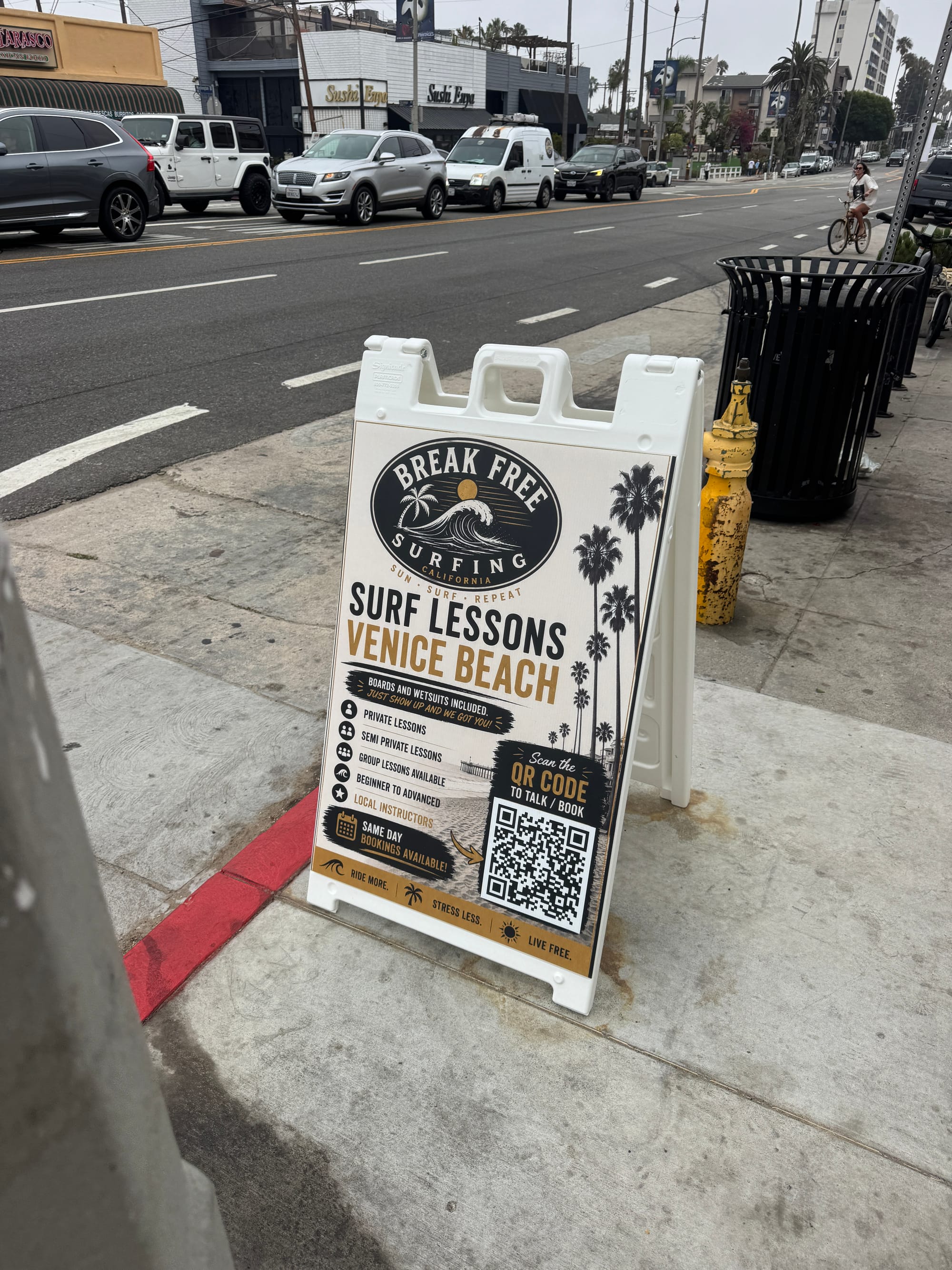
Once you notice a ChatGPT flyer, you will see them everywhere if you keep your eyes open. The art of the format is basically big, flashy bright text on dark background and an AI-generated or AI-altered image. There is almost universally a little box of generic icons in a bulleted list vaguely tied to whatever event or business it’s advertising, lines coming off of the text to emphasize whatever it’s saying, and either bolded words or underlined text and tons of arrows and checkmarks haphazardly strewn throughout. It is easier to just show you what they look like than describe it, because they all look basically the same:

The argument against ChatGPT-generated flyers is basically the same as the argument against all other types of AI slop: It looks generic, lazy, and like businesses don’t care. The designer Kenzi Green made a video about the backlash to AI flyers that has 870,000 views called “Customers are begging you to stop the AI slop.” Another video of a graphic designer putting his head in his hands and shaking his head while ChatGPT flyers scrolls past called “we are living in an AI flyer pandemic” has nearly 7 million views.
“Your logo, food truck wrap, social media graphics, menus all look AI generated,” Green said. “People are going to be able to spot that from a mile away and choose the competitor next to you that looks like they actually hired a human being,” she said. “It might feel like you’re ‘saving time and money,’ but you’re actually slowly turning your brand into something generic like all the other brands out there using AI tools.”
The rejection of ChatGPT flyers infesting real life spaces is real, growing, and cuts across languages and borders. The New Jersey-based sticker company Death By Stickers has started selling a “CERTIFIED AI BULLSHIT” sticker for people to slap on ChatGPT flyers: “With your roll of 50 “CERTIFIED AI BULLSHIT” labels you can let everyone around town know when that flyer is AI SLOP,” the company says. The Thomas House Bar in Dublin has said it will stop letting people post AI flyers in its pub: “We’re not accepting AI posters or flyers for the pub,” the bar wrote on Instagram. “We’re right next to Ireland’s biggest art college, lads. It’s not a good look.” A venue in Oakland has banned AI flyers, too. I have seen anti-AI posters in Portuguese (“TUDO IGUAL: FLYER GERADO PELO CHATGT? CLARO QUE SIM!” Same old story: Flyer generated by ChatGPT? You bet!) and German (“BITTE KEINE FLYER MIT CHATGPT” Please don’t create flyers with ChatGPT). I have seen numerous viral posts from people saying that they will not go to businesses or events that use AI posters to promote, lest one get roped into a Fyre Fest or Willy Wonka AI hellscape experience. And I have begun seeing real graphic designers offering low-cost services for companies that promise not to use AI flyers.





Jonathon Yule, executive creative director for design at the creative studio Concrete in Toronto told 404 Media that these types of posters continue a long tradition of terrible graphic design that we see in the world, but with “none of the charm” that may accidentally come from a business owner making something low quality.
“Terrible posters are nothing new,” Yule said. “The only difference today is generative AI makes it easier than ever to get the veneer of "polish" with none of the charm that these types of posters might have had when the designer was faced with constraints (usually time, resources or experience). These types of posters would have typically been done by designers either working at a small agency or print shop and these mid-level design jobs are disappearing. Stepping back to think about where this style (and its acceptance in the world) might have come from I'm going to have to pin the blame on YouTube and AB-tested-whatever-gets-more-clicks approach to thumbnail design with the exaggerated facial expressions and shoddy yet eye catching typography.”

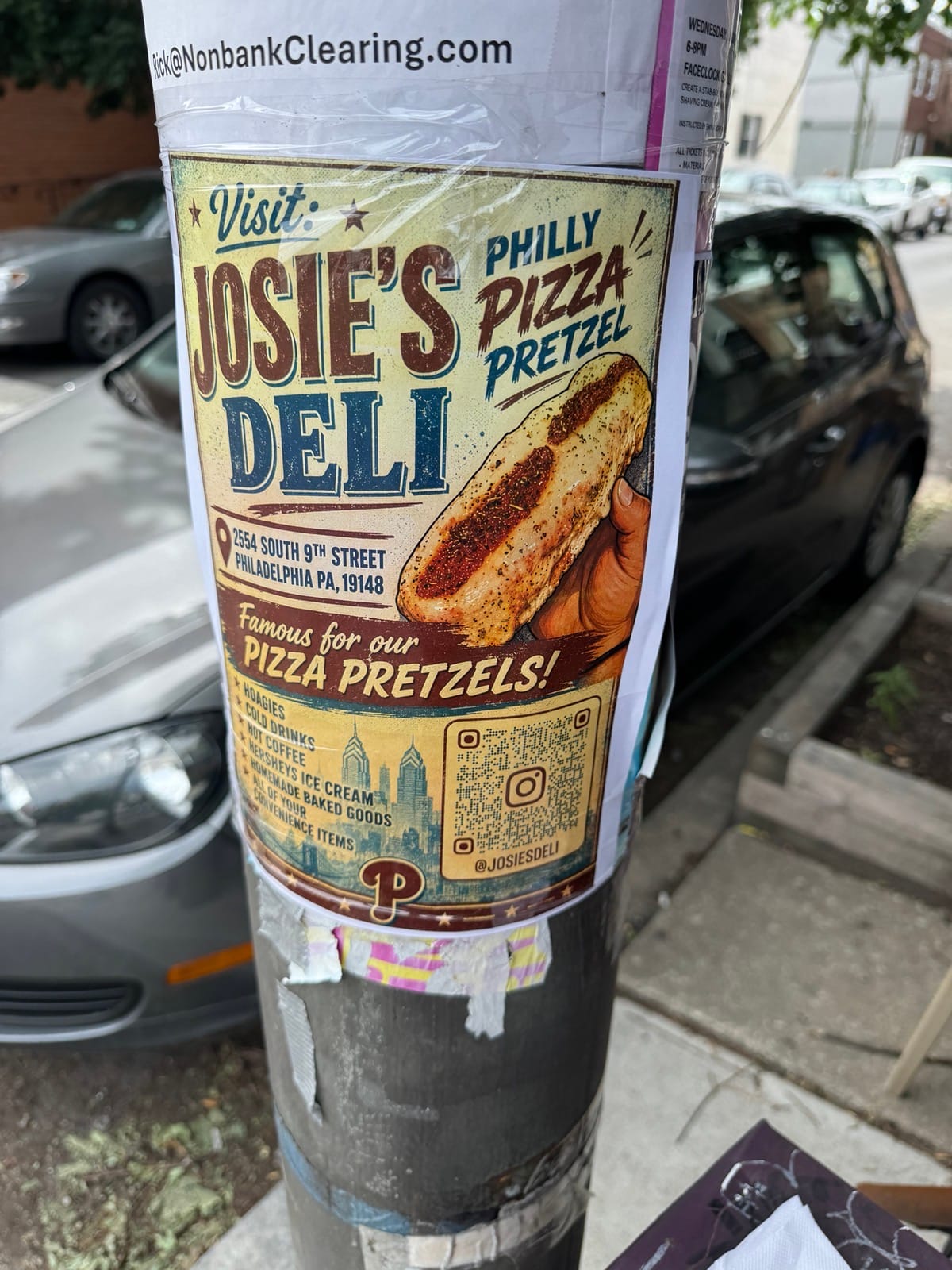
In the last few weeks, since I began noticing ChatGPT flyers, I’ve been taking photos of ones I’ve seen in real life, and have asked my friends to take photos of AI flyers they’ve seen out in the real world. I’ve seen them at Mexican restaurants and for surfing lessons in Los Angeles, on business cards for drug delivery services and on döner shops in Berlin, for pretzel shops in Philadelphia, and so on. I've tried at times to not notice these, but like with other AI, my brain feels like it is constantly trying to calculate whether any given sign or flyer was made using AI, and, if so, whether it actually matters.
These can be generated in ChatGPT easily by asking it to generate you a flyer or advertisement for any sort of event or business you can think of. ChatGPT routinely generated flyers that are essentially identical in format to what I see all the time when I threw random events at it: “Can you make a poster for my bar? It’s called Jason’s bar and we’re having a Fourth of July party. It goes from 4-10 pm and has food, fun, and fireworks,” and it instantly generated this, which is emblematic of the style.

None of the ChatGPT posters have the “Graphic Design Is My Passion” charm of quickly dashed off or handwritten posters, nor even the unhinged excess you might see in, for example, a Softbank Vision Fund slide presentation. For my money, one of the most iconic pieces of graphic design of the last 20 years is “Friendship Ended With Mudasir, Now Salman is my best friend.” With a ChatGPT poster, you get none of the sheer emotion that comes through the page with a mouse-drawn X. Here’s to bringing back an MS Paint aesthetic, handwritten scribbles, or literally anything else.

Same goes for "AI"-generated title images etc.


About a month ago, Flathub announced a ban on slopcoded applications. Evangelos “GeopJr” Paterakis, developer of a number of popular Linux applications and ton of other things, did some research into just how many applications tagged with “AI slop”, a tag Flathub reviewers used to keep track of slopcoded applications submitted to Flathub, actually survived the test of time. The results are exactly what you’d expect.
Of the 120 unique repos, 32 were maintained and 88 were abandoned. No seriously, a big portion of them was completely deleted, nowhere to be found, others stopped 6 months ago, right after submitting to Flathub.
↫ Evangelos “GeopJr” Paterakis
That’s absolutely soul-crushing. Why should Flathub’s reviewers spend their precious, limited time talking to lazy slopcoders’ “AI” agents to get their slopcoded applications into Flathub, when 70% of these applications are abandoned or outright deleted from existence within mere months of being submitted? Minimal effort for the slopcoders, maximum effort for the reviewers. Just dump a bunch of shitty code over the fence, let a chatbot handle the interactions with the reviewers, and pretend you made a valuable contribution.
This is the contradiction slopcode enthusiasts really don’t want to talk about. If these “AI” tools are so great, where is all the amazing new software? Where’s the massive gains in software quality? Isn’t the story that “AI” tools do the menial work, giving programmers more time to focus on improving their software? Reality does not seem to match the story we’re being sold. Despite these slopcode tools being out and available for years now, there’s no influx of great applications and other software, there’s no rise in software quality, nothing.
What we mostly seem to be getting are slopcoded projects nobody, not even their “creators” care about, so they just get abandoned and deleted as quickly as they were dredged up from the bottom of the programming barrel. These aren’t applications created because someone wanted them to exist; these are applications created because some mid programmer got high on their “AI” supply and fancied themselves better at programming than they really are – only to realise once the comedown hits they’ve got crappy, barely working, entirely unmaintainable gibberish vaguely looking like code nobody can make head nor tails of.
And then they abandon the project, ready for the next high – leaving everyone else to clean up their mess.
What a miserable workflow.

(Für ein Event wurde ich gefragt ein paar Worte zur politischen Dimension von Daten und Infrastrukturen der Digitalität” zu schreiben. Ich veröffentliche es auch hier kurz als kleine Notiz, weil es mein aktuelles Denken ganz gut zusammenfasst.)
Die Debatte über Daten und digitale Infrastrukturen bezieht sich oft stark auf das „wer“: Wer designed solche Systeme, wer wird ihnen ausgesetzt, wer wird diskriminiert oder bevorteilt? Alle diese Fragen sind selbstverständlich relevant, blenden aber doch eine zentrale strukturelle Betrachtung aus. Wir haben gesellschaftlich und politisch „digital“ mit „fortschrittlich“ gleichgesetzt. Alles muss „digitalisiert“ werden – wir haben dafür jetzt sogar ein eigenes Ministerium! – damit es voran geht. Digitalisierung als hegemoniales Verständnis der Welt läuft aber in die klassische Verwechslung von „Map“ und „Territory“, denn Digitales ist immer nur „Map“, wird aber behandelt wie „Territory“.
Die Auswirkungen dieses Denkmusters sind die Etablierung einer stark durch eine sehr simplifizierte, ingenieurs- und STEM-getriebene Modllierungssicht auf die Welt, die die realen Widersprüche und Komplexitäten der soziopolitischen und sogar physikalischen Welt negiert zugunsten eines Ansatzes, der möglichst einfach in Computercode gegossen werden kann. So werden dann Geschlechtsidentitäten als binäres „männlich/weiblich“ abgelegt und in einem Anflug an Inklusion noch ein „divers“ hinzugefügt, als ob diese dritte, am Ende nur als diffuses Sammelbecken fungierende, Datenoption strukturell eine Änderung vorgenommen hätte. Dieses Beispiel zeigt, wie stark die normierende Wirkung des Digitalprimates die Denkräume und Lösungsoptionen beschränkt.
Die Arbeit an konkreten Machtauswirkungen digitaler Infrastrukturen ist wichtig, aber die Analyse, Kritik und an vielen Stellen auch Bekämpfung von Digitalisierung als kultureller Logik darf nicht außer acht gelassen werden. Die Welt ist nicht das, was man in Computern und Algorithmen ausdrücken kann. Das ist eine für einige bequeme, aber gewaltvolle Illusion.


Today, Xbox was gutted. About 1600 people are being shown the door right now, with another 1600 to be affected in the coming year. Everybody knew this was in the works and has been bracing for it. But because Double Fine and Compulsion are being given independence and Undead Labs and Ninja Theory are being sold off (with the fate of Arkane Lyon still up in the air due to labor laws in France), some people are patting Xbox on the back. I have seen apologia for this move and praise for CEO Asha Sharma specifically for her candor. Fuck ‘em–you don’t need to hand it to these people.
Sharma’s “Resetting Xbox” memo is a masterclass in annoying and meaningless drivel. It speaks authoritatively in the first person as though Sharma has been there for longer than a handful of months, and the prose is muddy, tasteless, and confused. At one point Sharma ends one paragraph discussing Xbox’s ballooning portfolio and losing 64 cents for every dollar invested with “…we will help independent creators succeed by providing open development tools and audiences to realize their vision.” OK, I am sure that will help all the people out of a job right now.
She coyly returns again and again to the metaphor of “resetting” Xbox, a gaming metaphor I am sure she is smugly satisfied with because she uses it six times in what is ultimately a quite short missive. She talks broadly about the general profitability of Xbox while also stating that “the industry is facing the most severe hardware crisis in its history.” Hey Asha, quick question: could you elaborate on what is contributing to the hardware crisis? Could it perhaps be the company that you work for?
The entire thing is full of the typical “move fast and break things” pablum you see in people who don’t know what the fuck they’re talking about but pretend like they do. At one point in the memo, Sharma states, “We will deliver success through a flatter organization that is built around makers (individual contributors focused on building), player-coaches (leaders who remain deeply involved in the work while developing their teams), and directly responsible individuals (DRIs) who own key decisions and outcomes” rather than what she sees as the company’s previous redundant layers of management. These are not the utterances of a person; these are false words delivered in a pitch only millionaires and billionaires understand. These are the words of a pain sponge whose primary interest in games extends to less than a year and whose main leadership experience is with Instacart and Meta. And while laying the blame largely on bureaucracy is a nice line–people hate red tape–I don’t think 1600 bumbling middle managers are losing their jobs today. It’s people who make games like The Elder Scrolls Online and Doom, or the people responsible for accessibility (a hallmark of Xbox).
The entire memo is full of such wonderful brain gems such as “We know that great technology gets better when it gets simpler, not bigger” and “It is neither possible nor desirable to own every great independent studio. We have also learned that we are not the best home for every type of studio.” At one point Sharma states, “I want XBOX to be one of the few companies that entertains more than a billion people each day and gives everyone the opportunity to create and connect.” A BILLION PEOPLE A DAY, Asha? Creating and connecting, via Xbox? You just sent 1600 people into one of the worst job markets in history for the industry, and you’re talking about an install base of a billion, are you fucking high?
These are delusional, careless, and tedious people who will never suffer consequences like these, attempting to massage a bad message so they can get patted on the back for it. It speaks of austerity and profit margins with a ruthless, mercenary logic that they refuse to apply to the other, money-burning parts of the company. And while I do not doubt Xbox could have been run more efficiently, the problem isn’t Xbox; it’s Microsoft. Nobody has ever loved Microsoft; it has only been tolerated, and increasingly less so with its embrace of AI and enabling of genocide in Gaza. It is a B2B SaaS company wearing a person costume and demanding love like Scarlett Johansson in Under The Skin. This entire charade is all in the service of a scam, the livelihoods of countless people being thrown into a furnace so Satya Nadella can continue to dick around with Copilot, an AI product so bad that I have no evidence to suggest that anybody has used it on purpose including AI perverts.
You do not have to grant the upper management of Xbox plaudits for a kindly-worded bloodbath. They have done nothing for you and even less for the people who work, and worked, for them.
The news Wednesday that Sony was going to stop printing video games on discs has turned into quite the monumental event, finally making good on threats that date back as far as the launch of the Xbox One: namely that one day, and that day is very soon, we will no longer be able to truly own the games we are paying for.
Anyone who has paid attention to this kind of stuff for longer than yesterday will know we've been most of the way there for years. On console, many customers are buying games digitally (and have been doing so for a while), and even many disc-based releases have long been little more than glorified download keys. As for the PC, when was the last time any of you had a disc drive even installed, let alone bought a game that shipped on a disc?
(My personal answer is that I haven't had a disc drive on my PC since 2015, and that I think the last game I bought on DVD was...Dawn of War II?)
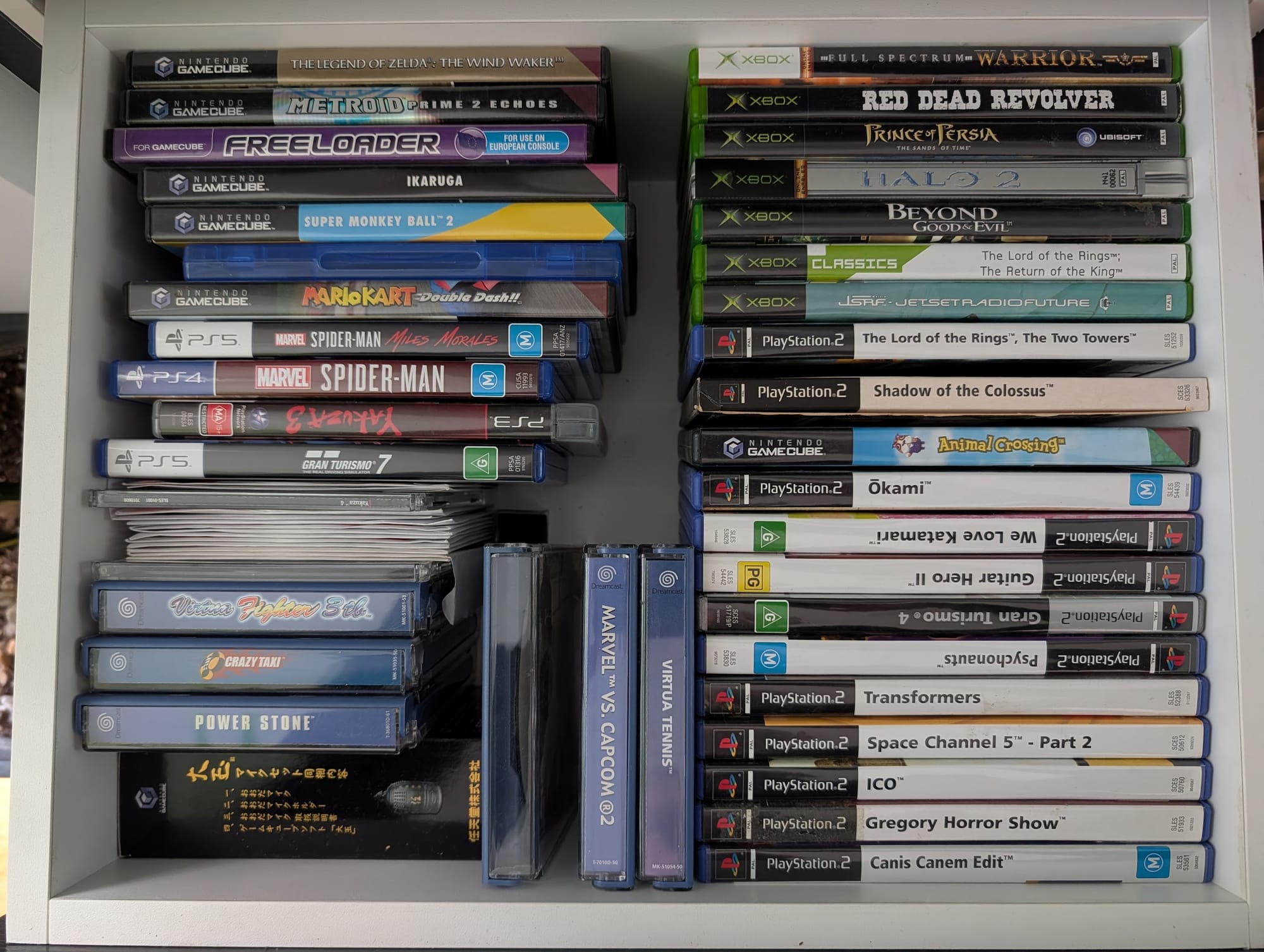
So this week's news is less of a bombshell and more of a milestone on a miserable journey, one that trudges us towards a future where we are all cultural tenants, forever renting products from a handful of companies and never truly owning anything. That sucks, but for now at least, the news compelled me to cheer myself up by going and cataloguing the depths of my remaining physical games collection, to take stock of the last video games I may ever own, and let me tell you: there are some stories, and some bangers, in here.
As someone who's worked in games media for 20 years now, and was obviously buying video games long before that, I have played more video games than I could possibly ever remember, let alone count. From a plastic box of half-forgotten C64 games that we got for free when I was four years old from "a friend at Dad's work", which are now long gone, through to the thousands of Steam releases I've downloaded in my current career but will never actually touch, most of that elusive tally are basically vapour to me now, games I may have played, but no longer own.
Everything in two drawers under the TV in my living room, however, are my keepers. For various reasons--some are all-time favourites, others just happened to come out on consoles released at a time I had both disposable income and a console that relied on physical media--taking a stock of them all today, in light of the news, has made me appreciate (maybe for the first time!) that owning these games has given me something more than just ownership.
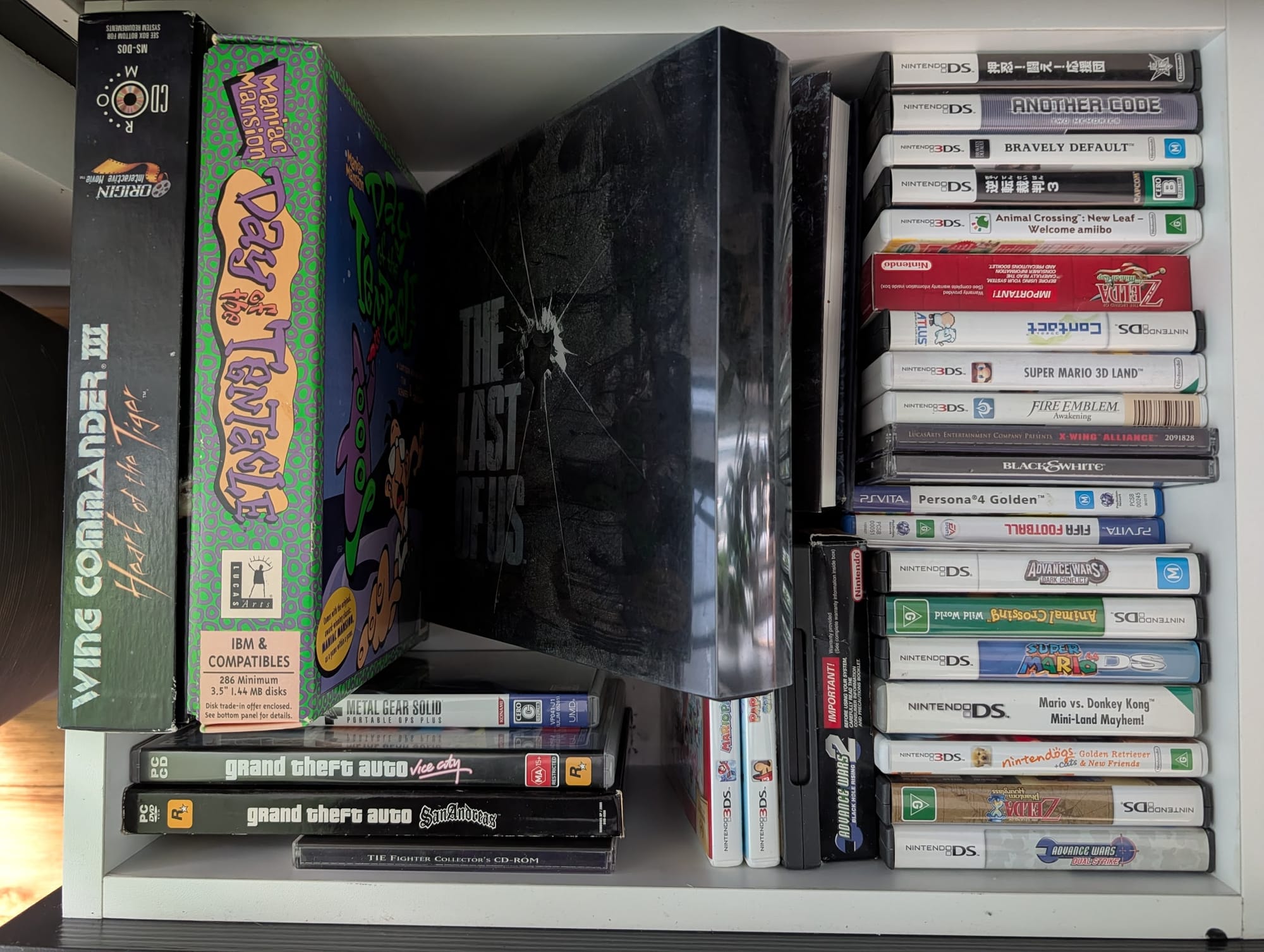
Like, on one level I own these games so I can play them again if I ever want to, sure. But I've owned a lot of games over the decades that I don't own anymore, and I think what's kept some of these around is that there are so many cool stories and memories associated with them, which carry weight beyond the 1s and 0s held within their cases.
I imported (at great cost) the Japanese version of Odama on the GameCube, a medieval pinball strategy game where you could issue voice commands using a special, included microphone. Voice commands I could never get right, because I do not speak Japanese. I couldn't get some GameFAQS-translated soundbytes right either, and so for the most part it was basically unplayable. Still, cool box!
I've got two press packs for two different Uncharted games that recall a time when publishers would put some effort into the major game releases they sent to traditional games media, instead of just sending out a download. Both shipped in custom packages that spoke to the game's theme (2 in a Tibetan-inspired wrap, 4 in a pirate-themed book). They are both, I think, worth a lot of money. If there's ever an Uncharted 5, I probably won't even get code for it.
There's Wing Commander III, a PC game I saved up AUD$125 for in 1993, which in 2026 money would be AUD$300, or USD$207. This was a game whose minimum specs demanded a PC with a DX66 processor; I knew I didn't meet that, with just an SX33, but I was so into Wing Commander and wanted this game so badly that I spent all that money anyway. When I finally got it home it of course wouldn't work, but after two days of tinkering with a literal boot disk I actually got it to run! And was able to finish it, despite missions taking around 15 minutes to load! It remains maybe my finest ever technical accomplishment when it comes to video games.
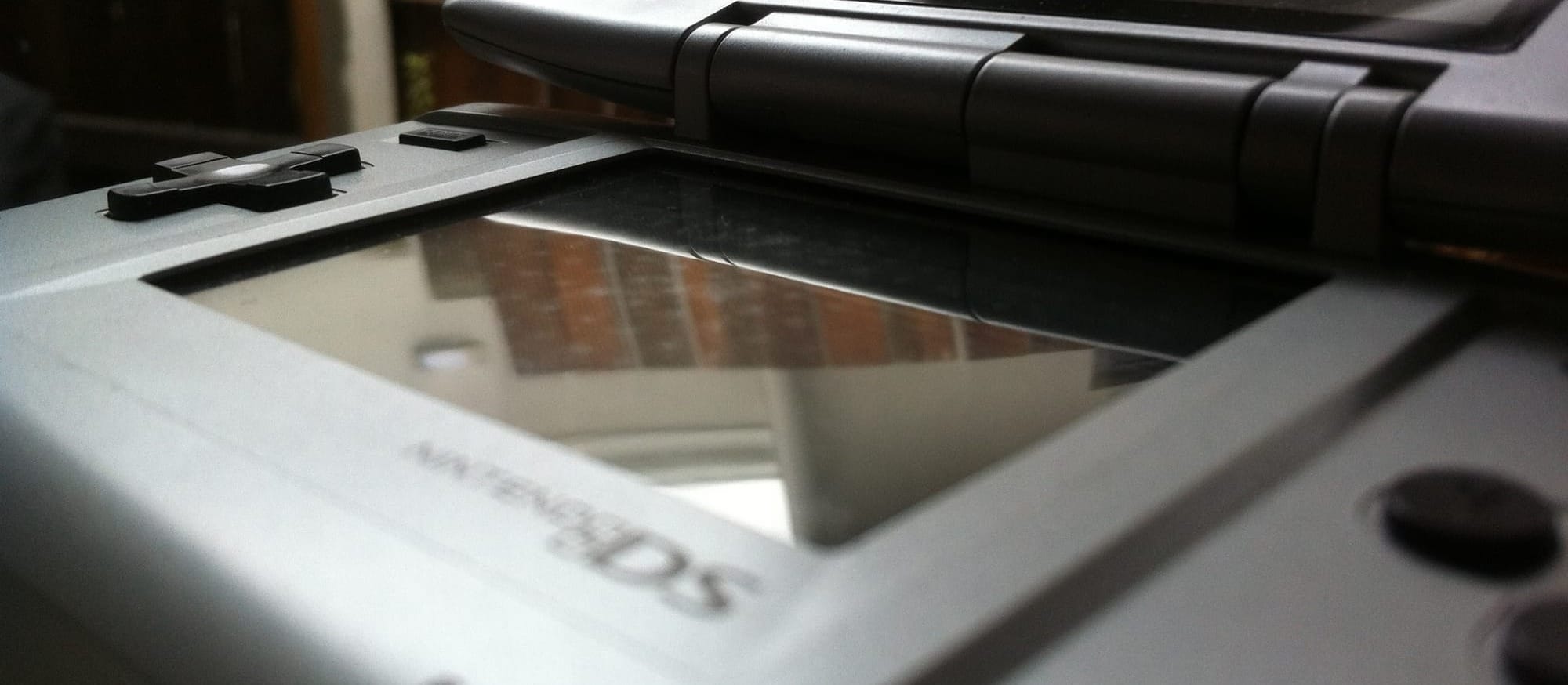
Advance Wars Dual Strike is a game I played so much that tapping on its units permanently scarred the touchscreen of my original Nintendo DS (see above). I played it so much that, at my first proper office job, while others were taking smoke breaks, I used to sneak it into the men's toilets and play a mission or two. Until one day I came out of the cubicle after finishing a battle to find my boss standing there washing his hands. He looked at me, at the DS in my hand and asked why I, a 25 year-old man in a corporate setting wearing business attire, had a camera in the men's bathroom. I couldn't find an answer beyond "uh it's not a camera it's a Nintendo". I never tried that again.
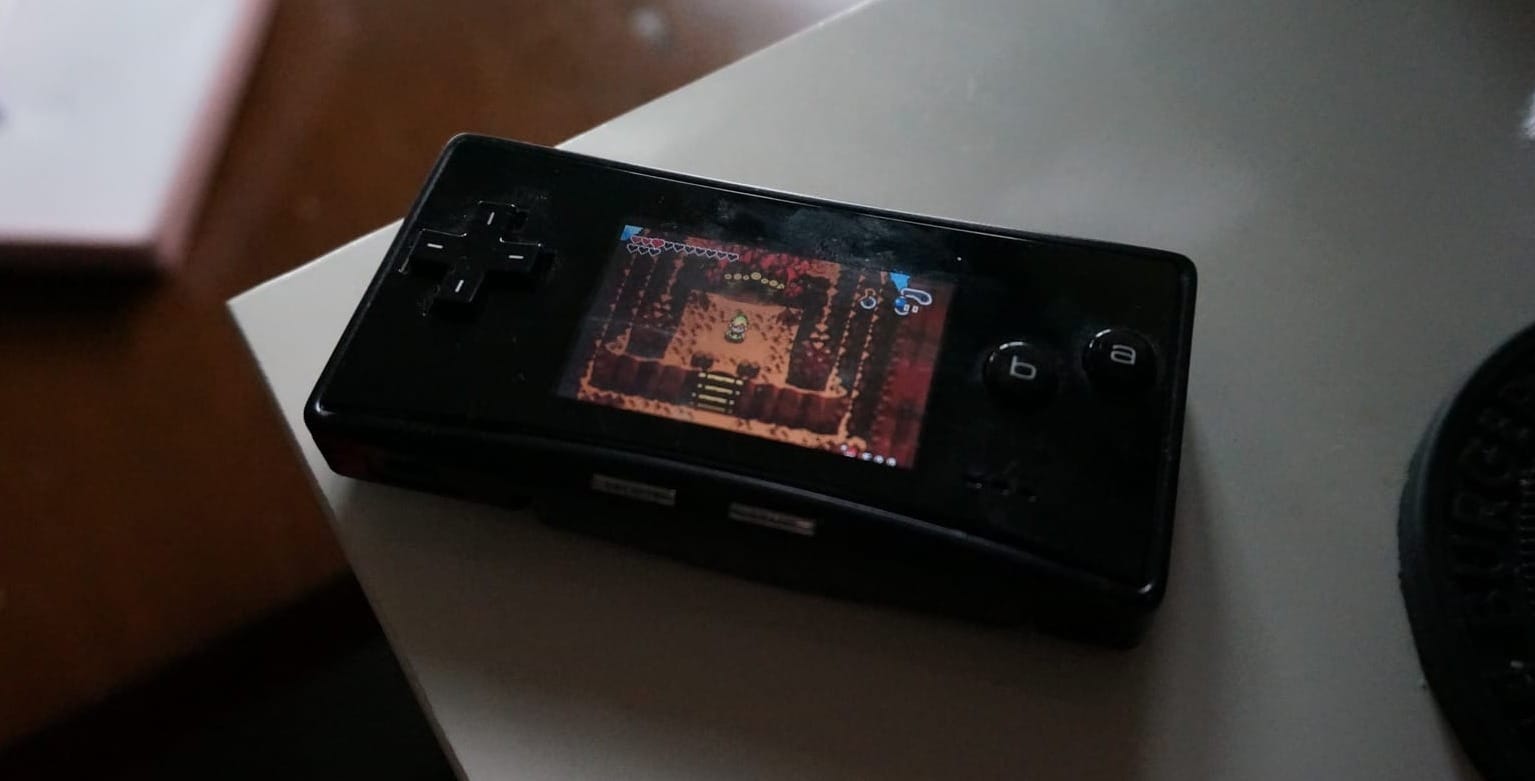
I got Minish Cap the same time I got a Game Boy Micro. It's the only game I ever played on my Game Boy Micro. I must have got that thing over 20 years ago, and after I finished the game I don't know if I have ever had to charge its batteries since. Every year or two I flick it on to see if it still works. And yes, I just did it and yes, it still works.
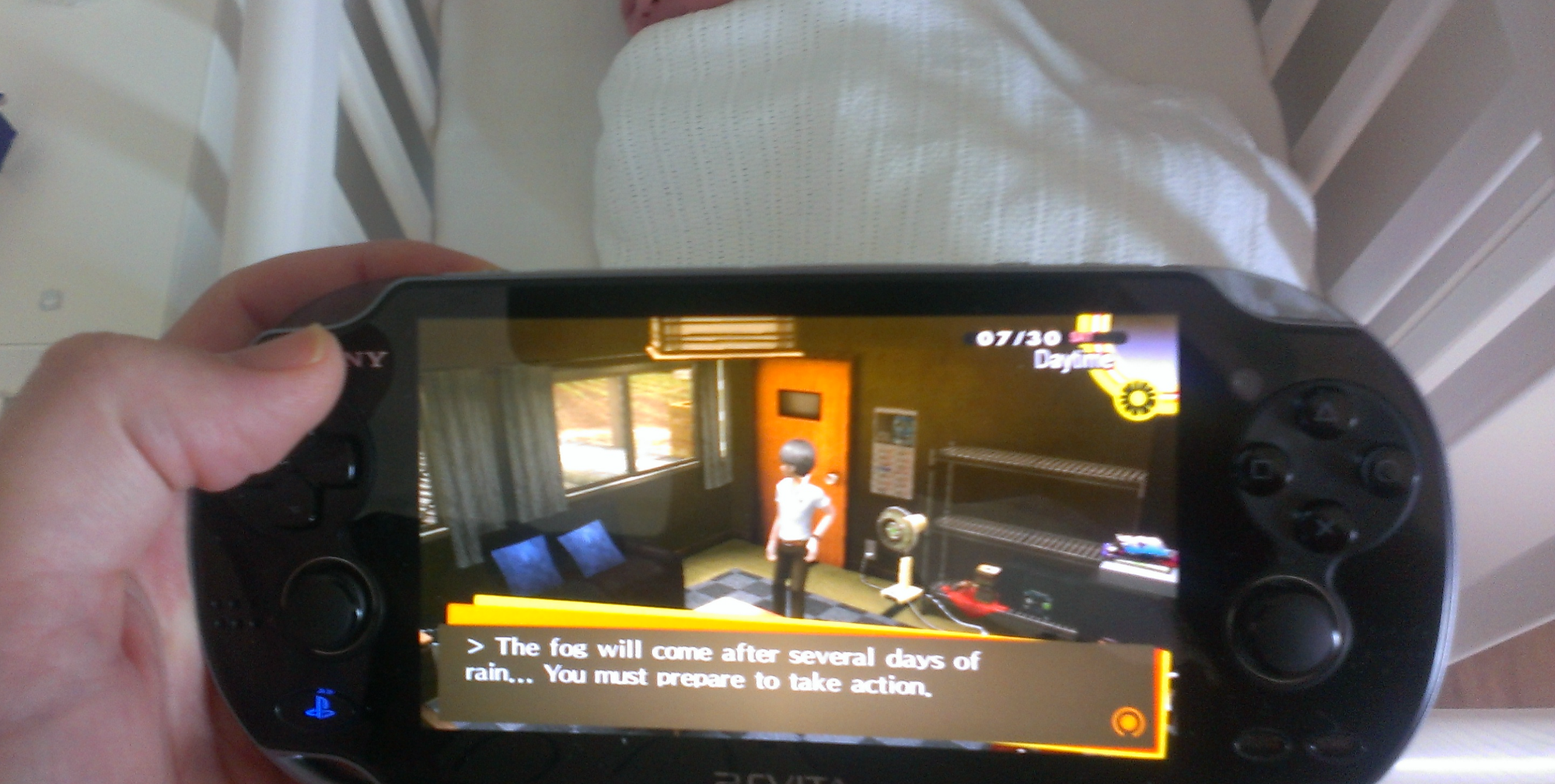
My PlayStation Vita, another handheld with an excellent battery life, was basically my personal Persona device, because most of its life was spent playing Persona games on it. I was halfway through the latter when, in March 2013, my son was born, and as my wife recovered from the birth he slept on my lap for most of his first night, while I passed the time playing Persona 4 Golden. I cannot think of the game without thinking of that moment.
Most of these games have stories like this behind them. Guitar Hero II wasn't just played at parties, it was the reason for the parties. Animal Crossing, and the GameCube memory card within its case, is home to a character and a town that I cherish like something I'll pass down in my will. I played Wind Waker as a co-op experience with two friends, huddled around a TV and sharing a Wavebird, in a way that made us brothers for life.
Holding these boxes now, feeling their cartridges and discs in my hands, I realise that still having them after all these years doesn't just bring back memories of the games themselves, but physical stories about owning and enjoying them as well, and owning these games is part of keeping memories about family, friends and… work toilets alive.
And in a way that makes me even sadder. To think that if things keep heading the way they're heading, future generations (or this generation, really!) won't be able to experience and tell the same stories because everything they play--and both my kids play a lot of games--can't ever be held in their hands, passed around friends or kept in a drawer so you can dig it out every decade or two, like a photo album or family heirloom, and let some memories wash over you.
If companies like Sony and Microsoft want to take away our ownership of video games, to break our tangible connection with the classics we play and love, there's little we can do to stop them other than refusing to buy their games going forwards. But everything in these drawers, all these physical boxes containing lived memories and games I can still play? They can never take those away.
